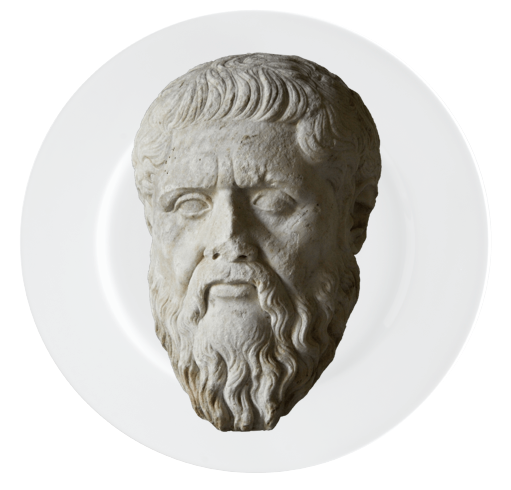

The Greek philosopher Plato (428 – 347 BCE) is often considered one of the greatest, if not the greatest, philosophers to have ever lived.
Plato wrote in dialogue form, and because of this his philosophical works read almost more like plays than prose. This is a particularly engaging style of doing philosophy that allows for really interesting philosophical questions, such as ‘what is justice?’ and ‘how do I live a good life?’ to be raised. However, it’s also great because it shows us the methods of philosophical debate, and in Plato’s case, how to question the view of another. In Plato’s dialogues, this questioning role is most often taken up by the character of Socrates, who spends his time doggedly interrogating various people around Athens in an attempt to arrive at wisdom. Socrates rarely succeeds in finding knowledge or truth during these often amusing, sometimes dense, and always interesting dialogues. However, in the course of Plato’s dialogues between Socrates and his discussion-partners, almost every interesting philosophical question worth thinking about is raised, which make Plato’s dialogues really interesting for anybody interested in philosophy.
We don’t know to what extent Plato’s dialogues truly reflect the views and deeds of the real Socrates, who is sometimes counted as the first major Western philosopher, and who is known to be somewhat of a teacher and mentor to Plato. Socrates, Plato and Plato’s student Aristotle form somewhat of a ‘holy trinity’ of Greek philosophers, but Socrates was unique for not writing down or recording any of his views or theories. What we can infer about Socrates as recorded by Plato is less what he actually thought, but more of the kind of individual he was: persistent, frequently annoying, controversial, fiercely intelligent and dogged in his desire to both search for truth and knowledge, but more importantly to live a good and authentic life. As such, Socrates is an entertaining character to engage with in Plato’s dialogues, and somewhat of a role model for anybody seeking these same things; to live a meaningful, intellectually curious, and authentic life in pursuit of what is good. Socrates in many ways embodies the striving for arete (‘excellence’) which came to be the goal of the philosophical life for both Plato and Aristotle, but also for a whole host of philosophers to have followed in their footsteps.
 Plato Digested