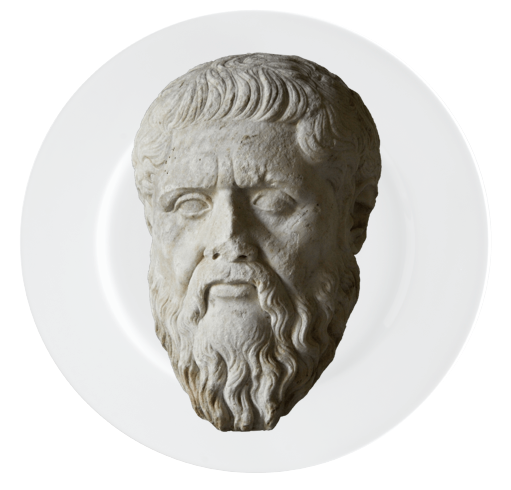
Before you read this post, have you read Phaedo (part 1)?
To recap on our previous post, Phaedo (one of Socrates’ friends) is re-telling the story of Socrates’ last few hours in prison before he meets his death. True to form as a determined and committed philosopher, Socrates has chosen to spend these hours discussing the nature of the soul and the afterlife, in a bid to comfort his friends that he is ultimately going to a better place after death. He’s already argued (based on the idea of ‘opposites’) that an immortal soul exists, and that it represents the pure and rational aspect of a human being, which is in constant conflict with bodily desires. Furthermore, Socrates has argued that the soul exists before death, and that all learning is remembering; and also, that the after death the soul will return to the perfect realm of the ‘forms’ from where it came. After being challenged by his friends, Simmias and Cebes, to provide a more convincing argument for the soul’s existing after death, Socrates responds…
Phaedo digested (part 2)
Phaedo: I was discussing with my friend Echecrates the last hours of Socrates, and the discussion that was taking place between him and his friends Cebes and Simmias about death, the soul and the afterlife. Let’s get back the the flashback!
——————————————-
Cebes: We’ve heard your arguments so far, Socrates, which support the idea of an immortal soul that exists before we are born. But surely you’re aware that most people think that this ‘soul’ just… disappears when you die, or is scattered and doesn’t survive the death of the body? That’s what many say: that death is simply non-existence: and unlike Epicurus, I find this quite a terrifying thought! So perhaps you could say something against this view?
Socrates: You mean that the soul scatters after death? I’d imagine that it would scatter even more in windy weather! Ha ha: an ancient joke there.
Cebes: Don’t joke about it Socrates: this is serious stuff!
Socrates: I think your fears that the soul is scattered after death are childish: and I shall tell you why. You say the soul could be scattered: does that mean that it must be the kind of thing that can be split up into parts, and is changeable?
Cebes: That seems to follow: if the soul is scattered and dispersed after death, it must be the kind of thing that could be split up and be changed, rather than be stable and unchanging.
Socrates: I will now try to show that the soul cannot be split up in this way, and so isn’t scattered after death at all. Think back to the forms, the pure ideas, that we were talking about in the last post. What kind of existence to they have: do they change, and are made up of parts, or are they stable and unchanging?
Cebes: We’re talking about Goodness, Justice, Beauty, right? Well obviously, these things are objective and do not change or break down into parts.
Socrates: Right. And what about horses, cats, tables, chairs and clothes? What kind of things are these?
Cebes: A completely different kind! These things are changeable.
Socrates: So it seems as if we have ‘two worlds’ of existence: the invisible, unchanging world and the visible, changeable world. This idea is a favourite of mine! Now lets get back to the soul: which category does it fall into?
Cebes: Obviously, it seems to be the first category: the soul is invisible, unchanging, and can’t be split up into parts. The body, on the other hand, seems to be the opposite! It’s in the second category.
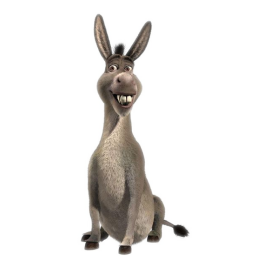
Socrates: Well there’s a start. We’ve seen then, that the soul cannot scatter at death like the body, because it is in a different class of things: it belongs to the invisible, unchanging world, and this is how it has knowledge of these things before birth: remember? So you don’t need to fear that your soul will scatter at death: it’s clearly not the kind of thing (unlike the body) that could endure this fate! In fact, I’m thinking that when I die (which will be very soon, by the way), my soul will return to the world of the forms, having been purified during my life of practising virtue, philosophy, and the sacred art of questioning and annoying just about everybody in Athens! Remember what I said before about the practice of philosophy being ‘training for death’: the pure soul goes to a good afterlife, whereas a soul that is dirty with ignorance and distracted by bodily pleasures during life goes to the bad place: or worse, is reborn as a beast! Think about it: if you’ve been greedy in life, and your soul is heavy with gluttony, you’ll be reincarnated as a donkey, obviously. Or if you’ve been unjust and tyrannical, you’ll be reborn as a wolf. And perhaps those who have lived a decent life, but not trained in philosophy, will just get reborn as good people again. Not bad… but not as good as the world of the forms, where I’m going! Strange isn’t it, how similar this all sounds to Hindu reincarnation… funny, since I only got this idea from Pythagoras, who lived up the road. Seems to crop up everywhere.
Cebes: So what you’re saying is that in order for your immortal soul to get to a good afterlife (i.e. the form-world, though I can’t actually imagine what it is like), you need not just to be a good person, but to live a life away from bodily pleasures, and pursue philosophy wherever it leads? Sounds tough!
Socrates: Believe me, it has been! But I have cared for my soul, and this outweighs any trivial desires for my own bodily pleasure I might have had. Every pleasure and every pain provides another nail that pins the soul to the body! Philosophers avoid these nails, and instead calmly contemplate the Truth, wherever they find it, and also try to live as virtuous lives as possible. If they do this, there’s no danger that their souls will be scattered after death, or be reincarnated as donkeys, and so if you’ve lived such a life (as I hope I have), there’s no fear of death at all!
Socrates, after saying this, remains deep in thought. There is a long silence. Cebes and Simmias, moved but still not convinced, whisper to each other.
Socrates: What’s up, guys?
Simmias: Well to be honest, Socrates, we’ve still got some doubts. You’ve waxed lyrical about the forms, the immortal soul, and reincarnation. These all fit together well, but we’re still unconvinced about the whole picture. There’s so many questions to be answered! And you’re about to die… do you really want to spend your last few minutes persisting in defending your view?
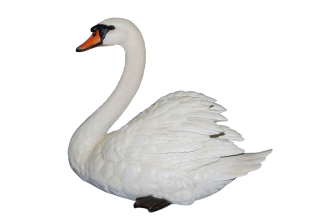
Socrates: (laughing). Guys, guys. Here’s a fun (and oddly moving) animal fact for you: did you know that swans, when they’re about to die, sing louder and more beautifully than ever before in their lives? They do this because they know that in dying, they go to a better place. I feel just like a swan, except instead of singing, I philosophise. Never before in my life have I been more eager to pursue the truth. Fire away!
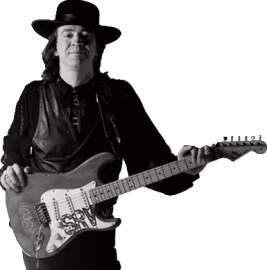
Simmias: Well spoken! Well, both myself and Cebes here have objections to your view so far. Firstly, let’s imagine a guitar: maybe my nice new shiny fender strat. When I shred with the volume turned up to 11, the strings produce this kind of sweet tone that is invisible, clear, unchanging and without body. But the strings themselves, which produce the sound (with a bit of help from a distortion pedal or 5) are themselves physical, finite, and bodily: if I shredded TOO hard, they would break! Not ideal half way through a gig… Anyway, what I’m trying to say is that maybe the soul is more like this: a kind of harmony of the body. In this analogy, the soul is the pure tone of my strat, and its strings are the body. The pure tone of the guitar, or the harmony, is only present when the strings and the guitar are arranged in a certain way: if I was to smash the guitar on stage, or set fire to it Jimi-Hendrix style, the harmony would be destroyed. So just because the soul is invisible and not made up of parts (just like harmony or that sweet, sweet strat tone), doesn’t mean that it survives the death of the body! If we think of the soul like this, as a kind of mixture or arrangement of physical things, your argument doesn’t follow.
Socrates: That’s a nice point! Let’s hear what Cebes has to say before I tackle these issues.
Cebes: Well, I have a different possibility. Lets assume what you say is true: that the soul can survive death and be reincarnated in many different bodies, be they donkeys or men. Is it not possible that the soul, though it is strong and stable, could be worn out by each rebirth? It’s like a bit like a person buying, and wearing out, different coats. Each time he buys a new coat (just as a soul is reincarnated into a new body), he ages until eventually, after the last coat he wears, he dies. Why could it not be that the soul eventually dies, having been worn out by many bodies? That’s not a nice thought, and it doesn’t get rid of my fear of death, since even my soul could be destroyed eventually!
————————————————————–
Phaedo: Well, I can tell you, after Simmias and Cebes made their objections, we were all feeling pretty low! Socrates had done his best to convince us that our fear of death was silly, but here he was, confronted with two new arguments, both of which showed the possibility that there really isn’t an afterlife!
Echecrates: I know what you mean! Sometimes with philosophy, it’s hard to know WHAT to believe. You hear one argument and are convinced that it’s a good one, and then you hear the counterargument and are convinced by that one too! How did Socrates respond to his friends’ criticisms?
Phaedo: Well I was hanging out with Socrates as we took a break from the discussion. I asked him how he was going to respond to such objections: even Hercules couldn’t fight two people at once! But Socrates was calm, and told me that he relished the opportunity to respond. He said that ‘there is no greater evil one can suffer than to hate reasonable discourse’, and I agreed with him. It’s so important to calmly and rationally defend what one thinks is right in the face of criticism, for the sake of the Truth! This has never been more true than in the 21st Century, and in the current depressing political and social climate they find themselves in there! Socrates also said that instead of shying away from difficult discussion, we should confront it head on, and not give up our views so easily. I agreed with him. He was a competitive old bastard, and not one to give up on truth without a fight! Here’s how he responded:
————————————————————
Socrates: Simmias, and Cebes. You both laid out objections to my argument in an immortal soul. Simmias, you said that the soul could be a kind of harmony that whilst invisible, doesn’t survive death. Cebes, you said that the soul could get worn out by many reincarnations and eventually die. To both of you: think back to the theory of recollection that I spoke about earlier: that all learning is simply the soul recollecting past knowledge of the forms, from before birth? Would you stand by this?
Cebes/Simmias: Absolutely!
Socrates: Well, Simmias, you’d better abandon your view of the soul as harmony, then. You can’t hold that the soul exists before the body and that the soul is a harmony! How could the sweet harmony and tone of your guitar exist before the guitar itself was made? It doesn’t make sense. Harmonize THAT!
Simmias: Um….er….. I see that now. Well I’ll stand by the recollection idea, then. Maybe the soul can’t be a harmony after all!
Socrates: You’re right: it doesn’t make sense. Also, if the soul is a harmony, we would have to say that all souls are equally harmonious! And this clearly isn’t true: some people are just bad people, and have impure souls. And furthermore, isn’t the harmony and tone of your strat dependent on the build of your guitar itself? The strings control the sound, not the other way around. If your view was correct, the soul would be able to have no control of the body at all, but in reality, of course it does. The soul is able to control and resist all manner of bodily temptations and also guide a person into acting virtuously. Harmonies cannot have such control over their instruments. No: the soul is more divine than simple harmony.
Simmias: I consider myself refuted! The guitar tone analogy was rubbish!
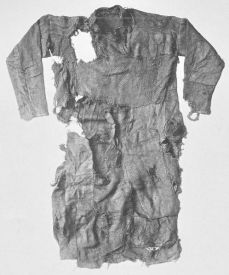
Socrates (turning to Cebes): now Cebes. You raised the idea of a soul wearing out many bodies but eventually being worn out itself, like a man wearing out many coats, but eventually dies. So the soul isn’t necessarily immortal, but instead could just be long-lasting (but eventually disintigrates). Sound about right?
Cebes: That was my argument, yes.
Socrates: Hmmmm (*thinks for a while*)…… that’s a tricky one. You know, it might be worth telling you a bit bit about my own intellectual development in order to respond to you there. I used to be a keen scientist, you know, and like all scientists I wanted to know exactly how the natural world works, and what kinds of things cause other things to happen, especially in human beings. I was desperate to know, for example, what kinds of things cause us to be alive, and how the human mind works on the basis of this. I realized that I was just confusing myself by asking these things, and couldn’t solve such challenging puzzles. Then I came across the philosopher Anaxagoras, who claimed that he could solve the problems with the idea that Mind is the basis of all reality. I was soon disappointed, however, when I realized that he didn’t really give a good solution to these issues at all, but blathered on about something called ‘ether’, which sounded to me like a load of nonsense. HE had no idea what he was talking about either! Turns out that some philosophers really talk a load of rubbish: who knew? Anyway, to cut a long story short, I didn’t get very far by finding out things from observation or by reading Anaxagoras, so I fell back on my own way of seeing the world and explaining things: and my way of seeing things involves the forms, which we’ve already mentioned. The things that cause things to be in the world are the forms: the form of the Beautiful, for example, makes beautiful things beautiful. And the form of Bigness makes big things big. And from the idea of these forms, Cebes, I will prove that the soul is immortal. You might well argue: why should we believe in forms at all? But I’m not going to argue for them here: they’re just part of the way I see the world. Are we all on board?
Cebes/Simmias: Sure thing, Socrates! Let’s agree for now that the forms exist, and explain why things are the way they are. What’s the link with the soul?
Socrates: Well, here we go: let’s take the example of the form of ‘tallness’. Things in the world that share in this form, all the tall things, cannot also share in the form of ‘shortness’. If a thing is tall, and then becomes short, then it must cease to become tall. This also goes for other qualities associated with that thing. Now, think about the body. What gives the body life?
Cebes: Well, the soul of course!
Socrates: We could then call the soul a ‘form of life’: it brings life to whatever body it inhabits. Now then: we were talking about forms and their opposites, and we saw that nothing can become its opposite whilst remaining itself. What would you say the opposite of life is?
Cebes: Well: death, obviously!
Socrates: Ok. And as we’ve seen, the soul is a bringer of life, and so death is something the soul could never be involved with! Something can’t share in its opposite, and this goes for the soul too. It follows from this that the soul is indestructible: it brings life, and cannot itself die. It is deathless, and therefore immortal! I have therefore proven what you asked of me, Cebes: the soul does not degrade after multiple reincarnations as you suggested, like a man wearing out many cloaks, but is immortal!
More ideas
The ‘affinity argument’ for the immortal soul
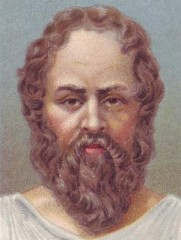
Up to the ending of this part of the Phaedo, Socrates has given three separate arguments for the existence of the immortal soul. They are the argument based on things coming from their opposites, and the argument from recollection (in my previous post, Phaedo (part 1)). The third argument, given in this part of the Phaedo, is the ‘argument from affinity’, and it’s a tricky one. Perhaps the thing that might puzzle modern readers of this argument, apart from the fact that it’s obscure and difficult to fully grasp, is the extent to which it depends on Plato’s idea of ‘forms’. I discussed this concept in the previous post, but it is particularly striking in this part of the dialogue how Plato/Socrates uses the concept of form to do heavy lifting in the argument for the soul, given that there is no real argument given for the forms themselves in this dialogue. Socrates, when he gives his ‘intellecual history’ and discusses the philosopher Anaxagoras, seems to suggest that the forms are a kind of ‘best explanation’ of how things come to have the features they do in the world; however, so much is left unsaid, and the idea of forms themselves remain obscure. It could be said, then, that though Socrates’ affinity argument for the immortal soul is interesting in itself, it can only be accepted to the extent to which the doctrine of the forms is accepted. Socrates’ friends seem to all too readily accept the idea in the dialogue, and perhaps this is the sign that here we have Plato propounding his own ideas directly, rather than simply reporting on the thoughts of Socrates. It might be also noted that another thing assumed rather than argued for throughout the Phaedo is the existence of the soul itself. Though Cebes proposes a view of the soul as disintigrating after death, which might sound rather materialistic, even he doesn’t consider the possibility that the soul doesn’t exist in any sense, which is what a modern materialist might say.
Metahor and imagery
Plato is a great literary figure as well as a philosopher, and this section of the Phaedo shows his great ability to use interesting images and metaphors to support Socrates’ arguments. Simmias’ idea of the soul being like the harmony produced from the strings of a lyre (replaced by a fender strat in my verson) is a lovely image, as well as Cebes’ notion that the soul is like a weaver who wears out many cloaks over a lifetime. Cebes’ view borrows from the pre-Socratic philosopher Heraclitus, who argued that everything in the world, including souls, is subject to eventual change and decay. My favourite is when Socrates compares himself to a swan: swans, he suggests, are prophetic creatures that are devoted to the god Apollo, and sing the loudest and most joyfully when they are about to die, for they know that they will be reborn in a better place. Whether or not swans actually behave like this prior to death, this was a famous idea in ancient Greece, and it’s where the phrase ‘swansong’ comes from. Socrates, of course, is a swan in the sense that he is devoted to Apollo, and is convinced that after death, he will go to a good afterlife: his version of ‘singing’ is passionately and doggedly engaging in philosophical discussion until the very end.
What happens now?
The substantial argument of the Phaedo is now over: Socrates has outlined his (or more accurately, Plato’s) view of the body and the soul, the forms, and how these ideas relate. Join us in the next post, in which the Phaedo is concluded with one of the most poignant and memorable scenes in all of Plato, and indeed in all of philosophy: Socrates’ death.
Disclaimer
This dialogue has been abridged and re-worded, with some silly bits added, to make the key arguments more accessible and engaging. It doesn’t represent a totally accurate re-telling of Plato’s original (which can be read here). However, it is designed to preserve the key basic thoughts and arguments, as well as giving a sense of some of the fascinating philosophical issues that Plato addresses in this dialogue.
 Plato Digested