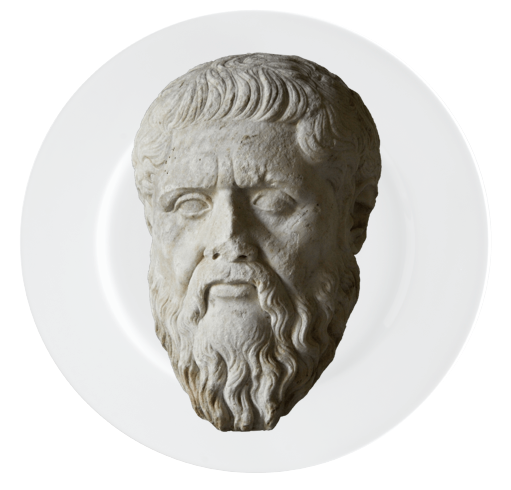
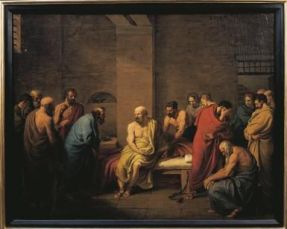
 To recap on our previous dialogues, Socrates has been condemned to death for blasphemy and corrupting the youth; furthermore, he was unable to acquit himself in court, and he refused the opportunity to escape from prison. In this famous dialogue, the philosopher Phaedo is asked by his friends what happened to Socrates in the end. In a kind of ‘flashback’, Phaedo tells his friends the remarkable story, and reports not only on a series of interesting arguments about life after death, but also on the remarkable and poignant way in which Socrates met his fate at last.
Phaedo digested (part 1)
Echecrates: I heard you were there, Phaedo, when…
Phaedo: Yes, so I was. And I can tell you, the way Socrates faced his own mortality in that prison cell was… memorable. And inspiring.
Echecrates: Tell us, Phaedo!
Phaedo: It pains me to think about it. I’ve never experienced a more surreal or astonishing day. All his friends, including myself, were there. Some were laughing, others weeping. It was an emotional rollercoaster, I can tell you.
Echecrates: Tell us more!
Phaedo: Very well. I will begin at the beginning….
———————————-
In Socrates’ prison cell:
Phaedo: Socrates, what is this? We’re told that today is the day!
Xanthippe: (wailing): Nooooooooo!
Socrates: Please excuse my wife. Ýou know, I’ve been thinking. I sat up just now, after having been released from my chains, and noticed how pleasurable the feeling was. The relationship between pleasure and pain… it’s a funny one! They seem to always follow one another… like a creature with two heads.
Cebes: That sounds like something Aesop would say. Since when were you into poetry?
Socrates: I’ve been really getting into it recently. Helps pass the time in prison, you know. Anyway, it’s nearly time for me to die, so please wish well those who care about me, and tell them: those that are wise will follow me to the grave!
Simmias: What! What do you mean?! Are you advising that we should all commit suicide?
Socrates: All I’m saying is that sometimes, and for some people, it is better to die than to live.
Cebes: What a load of….
Socrates: Hear me out! You’d agree, right, that if the gods indicated to a person that they should kill themselves, then that would be a good reason to?
Cebes: Well I suppose; but you suggested that wise men (i.e. philosophers) should be willing and ready to die, and this seems strange. After all, we are the gods’ possessions; wouldn’t they want their finest possessions, the wise men, to live? And the philosophers, being wise, would surely want to remain in service to their masters. No; suicide is for the foolish!
Simmias: He has a point!
Socrates: Let me try to defend what I said: that philosophers should be willing to meet their deaths head on. By killing ourselves, we do not flee our masters, the gods: we join them! For I am convinced that there is a life after death.
Crito: You know, Socrates, it’s not a good idea to exert yourself in a long philosophical discussion right now… I’ve heard it makes the poison take longer to work!

Socrates: Well, so be it! I’ve started so I’ll finish. The afterlife! It means we should be hopeful for death. As I’ve said before, the goal of the wise man is to practice the art of dying well. Why should we resent death when after death our soul goes to a better place? Let’s try and prove this. We can all agree that we will all die someday. What is death but the separation of the soul from the body? Only our souls go to heaven!!! Heh Heh: say that sentence out loud..
Simmias: Well that’s what they say.
Socrates: And we can all agree that philosophers are concerned with the state of their souls first and foremost, and not with other things like sex and eating and drinking: all the pleasurable stuff. The body is not knowledgeable like the soul: the eyes, ears, nose etc don’t tell us anything precise or accurate. However, the soul, or I could say the ‘mind’, can grasp the Truth, through logical reasoning! And it does this best when it isn’t distracted from the body. Nobody who is half way through a good old bit of hanky-panky can think straight, let alone philosophise!
Simmias: That is indeed so!
Socrates: Now lets think about the kind of truths that the soul has knowledge of. You’ve heard of the Just, the Good, the Beautiful: we know what these things are, but have we ever seen or heard them? We may have seen beautiful things in the world, for example, but we’ve never seen with our eyes the Beautiful itself, though we know about it. No: we grasp these truths though thought alone. Our minds are powerful: we can use them to track down reality itself, how things essentially are in themselves. The body and its senses just get in the way of this noble pursuit!
Simmias: This seems true. I do have the concept of the beautiful in my head, and it didn’t get there because I literally saw or heard it!
Socrates: Now then, given that the highest pursuit of the philosopher is to gain knowledge of these things (Goodness, Justice, Beauty etc), it follows that the body is a real pain in the arse in this regard. Bodily pleasures distract our minds from focussing on the Truth, and our desires, cravings and fears do the same. My friend Siddhartha over in India agreed, you know; and he seems a pretty knowledgeable guy. Pleasures and emotions, the stuff most people THINK is good, actually enslave us and prevent us from getting anywhere. It follows that we must escape the body if this true knowledge is to be found; which I think that it is. And of course, we can only do this after death (unless you believe what Pam Reynolds says…).
Simmias: This makes sense; anybody who loves learning must agree that true knowledge is possible, and that the body gets in the way of it.
Socrates: So I do feel that I can look forward to death: it will be a kind of purification. We’ve seen that this happens when the soul leaves the body, which kind of makes it dirty, and becomes clean. And this happens at death. Now then: how do I know my own soul is pure? Well, I’m a philosopher, and we clearly have the purest souls since we have spent our lives focussing on things like Beauty and Justice, rather than wasting our time having fun, like normal people! Well then, I believe I have proven my point: that philosophers should welcome their deaths.
Simmias: Well put that way, the idea of fearing or resenting one’s death seems downright foolish. Why would anybody fear going to a purer place?
Socrates: You’re right. And as I’ve said before: those who practice philosophy in the right way are in training for dying, and they fear death least of all men. A person who has lived a life of wisdom looks forward to the trip to Hades, because it is only there that true knowledge will be found. It goes to show that what I was saying in my “apology” in the court was right; it IS irrational to fear death, at least for philosophers like us. Courage, and living a moderate life, makes us brave, so that we can face death without fear. True virtue comes with courage, moderation, justice, and above all: wisdom. I have tried all my life to gain this: and therefore I look forward to death as a place where I will find good masters and good friends.
 Cebes: This sounds great Socrates, apart from one thing: I’m not convinced about all this talk of your ‘soul.’ Many people think that after death, it is destroyed, and no longer exists: I’d like to hear you prove the existence that the soul continues after death, as your whole view so far depends on this point! And I’m not convinced. And probably neither are the many readers in the 21st Century currently reading this blog!
Socrates: Fair enough Cebes: all this talk of a ‘soul’ seems a bit mysterious. Let’s try and prove its exists like I suggested earlier. Let’s think first about opposites: beautiful and ugly for example, or wise (like me) and stupid (like that Athenian jury that put me in this prison). It seems that each comes from the other: beauty only comes from ugliness, and wisdom only comes from ignorance, and vice versa. Agreed?
Cebes: So far, so good…
Socrates: Opposites, furthermore, seem to change into each other via a process. Waking up, for example, is the process of going from sleeping to its opposite, being awake. And falling asleep is going from being awake to being asleep. Now then: dying is going from being alive to being dead. What is the opposite process here?
Cebes: It appears that living must come from dying too, because we agreed that opposites generate each other.
Socrates: Well there we go then! The living come from the dead, and the dead come from the living. This can only work if the souls of the dead don’t pass away after bodily death: otherwise, the living wouldn’t be able to come from the dead. I’m thinking of souls passing from life to death, and then back again, proving that souls continue after death!
Cebes: A whole load of other things seem to follow from your view there. This idea that the soul is immortal is one, and another idea that all learning is remembering is another. What do you say about these ideas, Socrates? I’m not convinced yet…
Simmias: Wait… all learning is… remembering? That’s a weird one. Why would anybody think that?

Cebes: Well I guess because there are cases where people give correct answers to certain questions, and couldn’t have got the knowledge any other way. Socrates, didn’t you witness this once, when you got Meno’s slave boy to do a load of maths? Can you give us some more examples that prove that learning is just the soul remembering stuff from a previous life?
Socrates: Sure thing. Let’s get clear on what remembering actually is. For example, when I see something that belongs to somebody, I think of that person. Like when I see your iPad, Cebes, I think of you: I remember you, as I associate you with the iPad. Nobody else I know owns one of these ridiculous contraptions. But there are many other kinds of examples that show that remembering comes from association like this.
Simmias/Cebes: Seems like common sense so far.
Socrates: Well then, let’s get abstract (like us philosophers love to do). What about those pure ideas, those objective concepts that seem to exist above all earthly things. Things like Beauty, Justice, Equalness etc. How do we get knowledge of these? It seems that we get knowledge of these entities from things around us that are like them. For exampel, my pet cats Purrthagoras and Leucippuss, are beautiful: I see them, and the pure idea of beauty comes to mind.
Cebes: Fair enough. They’re very cute.

Socrates: But surely we can also agree that, if seeing these beautiful creatures makes us think of the pure idea of Beauty, then this is a case of remembering; we showed this before, in the case of you and your iPad. I see your iPad and remember you, Cebes. I see Leucippuss and remember Beauty itself. Now then, Leucippuss is lovely, but he’s not as beautiful as the concept of Beauty itself…. but still, when I think of him, my mind is also drawn to the Beautiful. From all this follows that I must have known about the Beautiful before I set eyes on Leucippuss, because as I have shown, seeing and stroking Leucippuss allows me to remember the Beautiful.
Cebes: Seems so… but… wait!
Socrates: Yes! It follows that we must possess knowledge of the Beautiful from before we saw beautiful things, and so on for Goodness, Equality, Justice and these other ideas. Where does this knowledge come from? Well, not from the senses (the eyes and ears etc). Everything we get from looking and hearing etc is imperfect, and lacking when compared to the pure ideas themselves. So the knowledge of the pure ideas must come from before we had the senses: before we were born! Can you see how this links back in to the idea of the immortal soul yet, that we were discussing beforehand?
Cebes: Wait, hold on. Let’s get this straight. You first raised the idea that the soul is separate from the body, and carries on after death. Now you’ve argued that all learning is actually remembering things from before we were born. So the natural conclusion to draw is…
Socrates: Precisely, old chap! Our souls exist apart from the body before death, and gained the knowledge we ‘remember’ in life from there. And also that this process is tied up with the idea of these ‘forms’ or ‘pure ideas’ that I’ve been speaking about: Beauty, Holiness, Goodness, Justice, etc.
Simmias: Your arguments are interesting, Socrates, and now myself and Cebes are convinced that the soul existed before death, and that this idea depends on these things you call ‘Forms’: the pure, objective ideas that objects in the world (like your cats) resemble in terms of Beauty, etc. But what Cebes and I are still curious about something. You haven’t actually proven that the soul goes on existing after death, just that it exists before death. And you claimed earlier to be able to convince us of the afterlife, which requires the idea of the soul existing after death, not before it. It’s not called the beforelife, is it now? And I don’t see a reason to believe in the afterlife. Why could it not just be that the soul comes from somewhere before life, but then is destroyed at death, and doesn’t carry on?
Socrates: Well guys, I did kind of already prove this when I pointed out that everything comes from opposites, and therefore that life comes from death as well as death from life. But ok… I’ll try harder on this. My modern fans are sceptical of religious mumbo-jumbo and other unfashionable ideas like the afterlife, so more arguments are needed. Stay tuned!
More ideas
Why does Socrates try to prove the existence of the immortal soul and the afterlife? Why even think that there is a soul at all?
 Socrates is about to die by drinking poison in front of all his friends: however, he seems remarkably upbeat. The Phaedo is all about why this is: Socrates seems to be convinced that his soul, which has been purified during his life, is going to be separated from his body when he drinks the poison, and he will therefore go to the Good Place. The whole dialogue is about Socrates proof of this happy idea: first he suggests the idea of a soul separate from the body (which his friends are all ok with in principle), and then he argues that this soul is immortal on the basis of these things called ‘Forms’ (or ‘pure ideas’ in my re-writing). These beliefs then get put together in the next part of the Phaedo to support Socrates’ claim that there is an afterlife.
To modern readers, these ideas can seem strange. Intellectual history has come a long way since Plato, and the idea of a ‘soul’ can sound like religious mumbo-jumbo to many people these days. Even the idea of a mind somehow ‘separate’ from the body can easily concern us: how is it still possible to believe in these ideas in the light of modern neuroscience and the suggested scientific perspective that the mind not separate from the body, but dependent on it, or even the same thing as it? This could lead us to dismiss Plato’s dialogue as a historical, unscientific relic; however, this is not the case. Dualism, the view that the mind is non-physical in some respect, still has its defenders today, if not in the full sense of an ‘immortal soul’, and besides, Plato raises a number of interesting arguments in the Phaedo that might make us reconsider this notion. The argument from remembering, for example, is a genuine attempt to explain where our knowledge of concepts such as Beauty and Justice come from: Plato suggests a soul that pre-exists our bodies as a possible explanation, arguing that we can’t gain true knowledge (of the ‘forms’) through the senses, because in order to recognise beauty in a thing, we need to have some pre-existing idea of it. This is another intriguing idea, separate from the question of the soul: are some ideas innate, or do we gain all ideas through experience? The philosophical struggles of the 16th and 17th Century between ‘rationalists’ such as Descartes and ’empiricists’ such as Hume are based on this thought. Plato is very much an early rationalist.
Fine, but why should we accept that the forms exist in the way Socrates/Plato claims?
Plato talks in this dialogue (via Socrates, of course) about the forms existing objectively,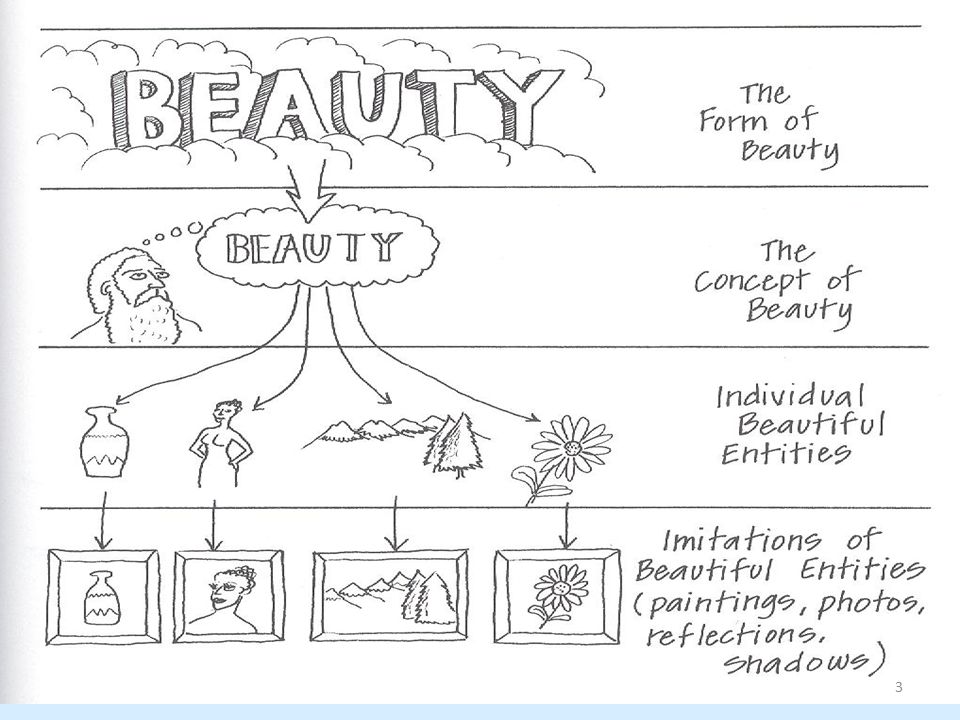 in a separate reality. This is in fact his actual view: there is an immaterial, almost heavenly world out there which we refer to when we say that something is ‘beautiful’ etc. This is one of Plato’s most famous and also most controversial doctrines, and is simply assumed in the Phaedo, rather than formally argued for. In fact, Plato rarely presents any detailed arguments for the forms in all his work, and the doctrine substantially evolved over the course of his writings as well. In Phaedo, the idea of the forms plays a role in establishing the existence of the immortal soul, but in other dialogues, such as the Republic, the forms get focused on in their own right. If it seems like a crazy, unscientific and baffling idea that there could be an eternal, spiritual heaven of abstract objects, it’s worth knowing that Plato himself thought of the world of the forms as a ‘mathematical’ kind of place, rather than a ‘spiritual’ one. Furthermore, he didn’t believe in the Forms as a matter of religious faith (and we are not talking about ‘heaven’ here in a religious sense): he thought that the forms was an idea that could solve all sorts of other philosophical problems about thinking, and also how things in the world have their qualities. We will be discussing the forms much more over the course of this blog!
As Socrates said: stay tuned for Phaedo: part 2!
Disclaimer
This dialogue has been abridged and re-worded, with some silly bits added, to make the key arguments more accessible and engaging. It doesn’t represent a totally accurate re-telling of Plato’s original (which can be read here). However, it is designed to preserve the key basic thoughts and arguments, as well as giving a sense of some of the fascinating philosophical issues that Plato addresses in this dialogue.
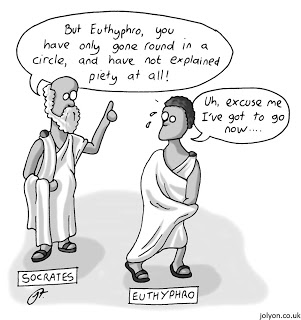
 Socrates has been accused of insulting the gods and corrupting the youth of Athens, and seems determined to prove his innocence. He meets his friend Euthyphro, who believes himself to be somewhat of a prophet and a sage when it comes to the nature of the gods. Socrates has a chat with Euthyphro in an attempt to get to the bottom of what the nature of holiness really is, hoping that this knowledge will help him prove his own holiness, and innocence, in court. But it turns out that Euthyphro has a tricky court case of his own, and also that holiness proves annoyingly difficult to define….

 Plato Digested