Phaedo (3/3) – the journey to the other side

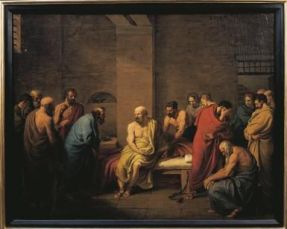
1280px-David_-_The_Death_of_Socrates
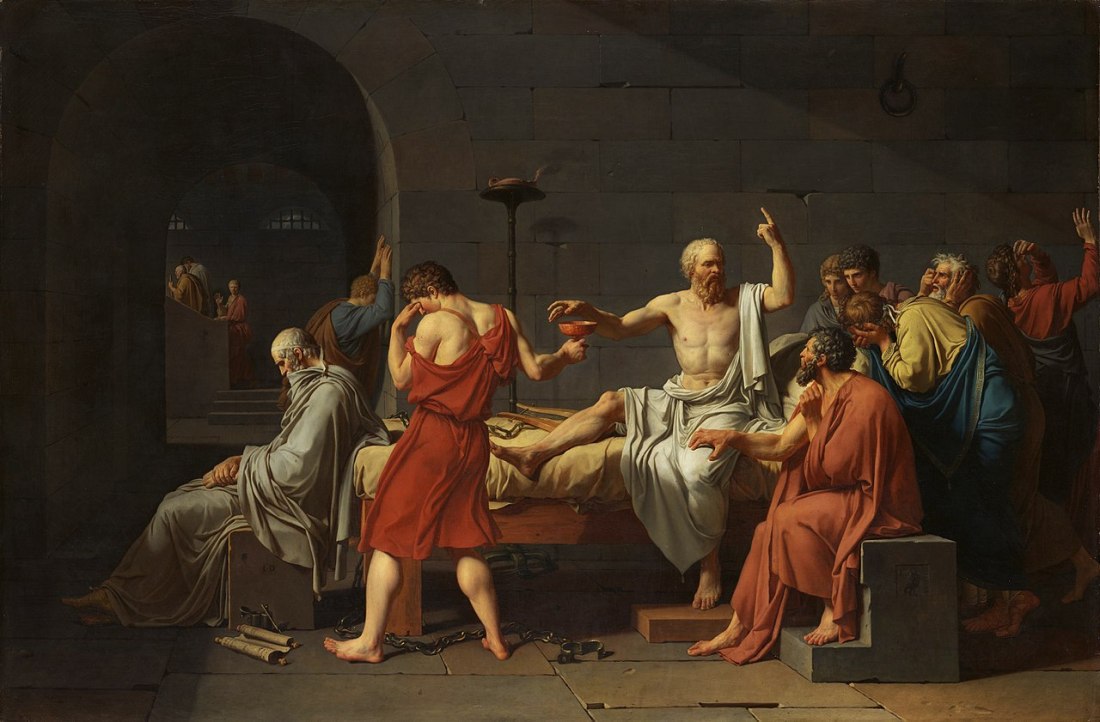
Jacques-Louis David’s famous ‘The Death of Socrates’ (1787), depicting Socrates attitude to his death, and the pain suffered by his friends. Socrates points up, to the forms, just as Plato does in Raphael’s ‘School of Athens.’

Before you read this post, have you read about part 1 and part 2 of the Phaedo?

Socrates is in prison awaiting his death, and like the committed philosopher he is has chosen to spend his final hours engaging  his friends in a discussion about the immortality of the soul and the afterlife. Hoping to go to a good afterlife himself, Socrates has presented some tricky and rather controversial arguments for the immortal soul, the forms, and the idea of learning as recollection. In his final hours, he now digresses in mythological terms about what he thinks actually happens to the soul in the afterlife, and how the universe is constructed, after which he bids his friends goodbye. Here in the Phaedo, Plato is at his weirdest: and also (towards the end of the dialogue) his most poignant!

Phaedo digested (part 3)

Socrates: Well if my arguments for the immortality of the soul are anything to go by, it should matter a lot what happens to the soul in life as well as death! If the soul has to be pure in order to go to a good afterlife, we need to take care of it in this life. This is handy, as it means that bad people get the punishments they deserve, and good people get their rewards. Surely one of the most psychologically fundamental notions in all of humankind!

So what happens exactly to the soul after death, depending on whether it had a pure life? Well, the myth goes that a person dies, their guardian spirit (or angel) leads him or her to a kind of judgement place, like a court, where their fate will be decided. After this, they are guided on the path to the underworld, and after having served their time, a bit like in prison, they return. The path between here and the underworld has many forks though, I think, and it’s important for souls to follow their guides along the right path. Those that ignore their guides and cling on to the physical world, with all its pleasures and distractions, and engage in bad behaviour will wander for a long time before reaching its destination. Those of a pure soul who have lived a pure and moderate life, however, will be guided to a good place.
Bartolomeu_Velho_1568
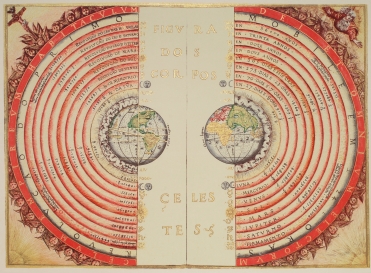
The ‘geocentric’ model of the cosmos, with earth at the centre, was a common (yet understandable) mistake made from antiquity up to Copernicus in the 1500s.

There are many strange places that souls can go; and there are many strange places on the Earth too! Humour me whilst, in my final minutes, digress about how the universe is put together. The earth, by my reckoning, stands at the very centre of the cosmos, and this is why it stands still, and doesn’t need anything (like air, of whatever) to keep it in place. Furthermore, the earth is very large and sits with the stars within the mysterious substance called the ‘ether’. We actually dwell in the ‘hollows’ of the earth, you know, but mistakenly think we live on its surface. We think of the atmosphere, the air, as beyond the earth, but it is actually a part of it. The heavens, which lie far beyond the atmosphere itself, are infinitely more beautiful than the sky we see. We live like deluded creatures, not seeing clearly the nature of the world or the heavens, but believing that what we see around us is all there is.

Simmias: That’s a nice image, Socrates. This idea that we don’t see the world for how it really is, and are mistaken about the nature of things…. it reminds me of what you said in The Republic, when you spoke about the allegory of the cave

Socrates: We will get on to that one in a later blog post! For now, let me continue my account of the heavens and the earth. When looked at from space, the earth is a colourful, spherical ball. Much that is beautiful grows on the earth: all of nature’s glories cover it. Just watch any of David Attenborough’s excellent nature documentaries if you don’t agree! The earth is also covered with living creatures on land, in the air and in the sea. But just as we live on land surrounded by sea, there are even people who live on islands surrounded by air. They are like a race of supermen; they have no disease, and can see the heavens for what they really are.
4869440_orig
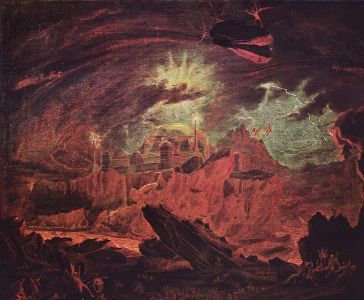
Tartarus, the equivalent of ‘hell’ for the Greeks, and a place that was literally underground.

What about below the earth’s surface? Well I’ve heard that there are all these interconnected rivers of fire beneath us, all of which are interconnected, and lead into a giant pit which Homer calls ‘Tartarus.’ – a terrible place. The Titans are imprisoned down there, you know. The rivers above the earth are all connected to Tartarus too, via a large and mysterious underground lake called Acherusia. One of the rivers that flow into this lake is the Styx, which you may already have heard of.

So if you believe this account I have given of the earth, it seems that there is much more to existence than meets the eye: in fact you can believe this without subscribing to the mythological account I have just given.

Simmias: That’s…. all a bit weird Socrates. I’m not sure I agree (or understood!) all of it. But tell me: how does this mythical account of the earth that you just outlined link to what you were saying before about the afterlife?

Socrates: I’m glad you asked! Let’s get back to the dead, and their journey to the afterlife with their guardian angel, or guide. They’re being judged. The ones who have led an average life go and chill in Acherusia (that lake) for a bit, until they have been purified more. It’s a bit like purgatory in Catholic Christianity. Most people go here. However, the people who have led such wicked lives, however, that they cannot be redeemed (murderers, rapists and the like) are HURLED into Tartarus (that big pit I was telling you about) and stay down there. Those who are criminals, but aren’t THAT bad (for example, those guilty of crimes of passion) get chucked into Tartarus but one year later get magically swept back out again and back to the lake. Once there, they have to convince the souls of their victims to forgive them… otherwise they get put back in Tartarus again! It’s a neat little system, if you think about it!

Simmias: Riiight…..

Socrates: Finally, those who have led a holy and virtuous life are freed from the earth altogether. They go to that pure place I was telling you about, with no disease and superhuman people. The philosophers go to a particularly good part of this place: they live in this unimaginably beautiful place, with no bodies: perhaps a bit like Buddhist Nirvana! There’s not point trying to describe what it’s like though; you have to be there to understand.

Simmias: Socrates, after listening to all of this, I’m starting to think you’ve been smoking the waccy baccy again…

Socrates: Not so, Simmias! Let’s be honest: no sensible man would ACTUALLY insist that the myth I have described is the definite truth, but it’s worth taking the risk and believing it, I think, or something like it. We’ve all agreed that the soul is immortal, so it makes a certain degree of sense to think that something of this sort, good or bad, happens to it after death. I myself am in high spirits about the state of my own soul; I have pursued the pleasures of learning and wisdom to the very end, and have gained virtue. Here’s hoping I go to the good place when I die! Which is any minute now…
Picture_Natural_History_-_No_365_-_The_Hemlock
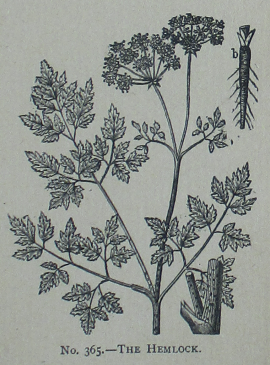
Socrates opts to drink hemlock to fulfil his death sentence. It produces violent and disturbing symptoms when eaten; Socrates’ death was most likely sanitised by Plato (see thoughts at end of post).

[Addressing his friends]: Now then; you will all take this great journey I have described at some point. But my own turn has finally come. I’ll be drinking poison: specifically, hemlock. I’ll have a bath first though: it will save them washing my corpse!

Crito: My dear friend. I tried to persuade you to escape from here, but … here we are, and you have made clear your decision. Do you have any instructions for me, concerning your family or anything else?

Socrates: Nothing, Crito. All I would say is take good care of yourselves: I really mean your souls! Live as I have taught: with integrity and virtue. This is what I want for you and all my friends.

Crito: We will, old friend! But how should we bury you?

Socrates: Any way you like! After I have drunk the poison, you’ll only be burying a lifeless corpse: you won’t be burying ME at all! Tell yourself you are burying ‘Socrates’ body’; Socrates himself, hopefully, will have gone to a better place!

——————————————————————

PhaedoWell, we’re nearly at the end of our epic story. After Socrates said these things, he and his friends, myself included, stayed on. We discussed all that we had heard and were heartbroken, for we felt we were losing not just a friend but a father as well. After he had bathed, he said his last goodbyes to his family. Soon, the jailer came in to instruct Socrates to drink the poison, but even he had tears in his eyes. ‘You’re not like the other prisoners’ he said to Socrates. ‘You are the noblest and best man to ever come into this prison. You know what I am bound to tell you; I wish you well!’. With that, the jailer left with tears in his eyes.

Socrates: What a nice chap! He’s been nothing but agreeable to me since I came in here. Anyhow, on with the job. Bring me the poison!

Crito: (desperately) Wait, Socrates! The sun has still not set. We have more time… why not sit with us, eat and drink, and spend more time with your loved ones?

Socrates: There is no use in doing this, Crito. I do not cling to life: I have none left, so now is the time to die. Do not refuse me: bring me the poison!

Phaedo: With that, the poison was brought forth by a slave. Socrates asked him what the procedure was. The slave told him that he should drink the hemlock, and then walk around until his legs felt heavy; then he should lie down. He offered the cup to Socrates… and he took it quite cheerfully. There was no hint of change in his expression. Saying a quick prayer to the gods, Socrates drained the cup of poison.

Up to this point, myself and his friends had held back their emotion; but after we saw him drinking the poison, we could do this no longer. I covered my face, and Crito was beside himself. Socrates himself seemed annoyed by this outpouring of emotion, and bid us control ourselves. His words made us feel ashamed, and we checked our tears.

After walking around for a while, and when his legs were heavy, Socrates lay down on his back. He gradually lost the feelings in his feet and legs; and as the numbing coldness crept up his stomach towards his heart, he whispered to Crito his final words: ‘Crito, sacrifice a cockeral to Asclepius, the god of medicine’. Crito promised him he would. ‘Is there anything else, Socrates?’ he asked through the tears. But there was no reply: the great philosopher’s eyes were fixed and unmoving.

Such was the end of our comrade Socrates: a man who, we would say, was of all those we have known the best, and also the wisest and most upright, we have ever known.

——————————————————————

More ideas

What is this weird cosmological myth stuff all about? It makes no sense following on from Plato’s complex philosophical discussion about the soul!
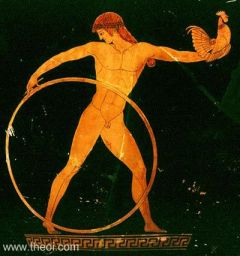
O24.3Ganymedes
Socrates bids Crito to sacrifice a cock to Aesclipus. In ancient Greece, this is what sick people did in hope of a cure; did Socrates see life as a kind of ‘sickness’ from which we must be cured?

It is unclear how seriously Plato meant his readers to take the mythological proposals at the end of the Phaedo. The dialogue itself is much better known for its arguments concerning the soul, afterlife and forms, which formed the bulk of the dialogue up to this point. However, it is not the only dialogue that consists of serious philosophical discussion quickly followed by mythology; though the transition can seem jarring to modern readers, Plato uses this combination of philosophy and myth in the Republic and the Gorgias, two highly substantial and respected dialogues. Furthermore, his epic work the Timaeus consists almost in its entirety of the kind of seemingly proto-scientific cosmological theorising found first in the Phaedo. Many scholars, like many modern readers, have been tempted to bracket off these myths from ‘Plato’s serious thought’, and treat them as a historical curiosity or otherwise not take them seriously. However, Julia Annas argues that this isn’t the right approach, and suggests that the myths link more closely to the philosophical arguments than have been previously thought; for example, they often serve to add allegorical context or imagery to thoughts expressed in Plato’s philosophy. This can surely be seen in the Phaedo, where Socrates uses the mythological account of the soul’s journey to Tartarus, Acherusia or the heavenly realm as a means of explaining how justice is served in the afterlife. Futhermore, Socrates explicitly states in the dialogue that it would be foolish to assume that his theory represents knowledge of how the afterlife is really like. It’s more likely that Plato is here drawing on the myths of his day to give a mere suggestion of how the afterlife might operate, rather than a literal description. I this vein, it is more satisfying for the modern reader to read the mythical sections of the Phaedo not primarily as comology or proto-science, but an attempt to gesture towards something which Socrates happily admits cannot be fully understood or conceptualised.

Socrates’ last hours: would he have had SUCH a peaceful death?

Socrates has a rather peaceful death as described in the Phaedo (‘euthanasia’ means ‘a good death’ from the Greek). The way Plato, through Phaedo, tells the story of Socrates’ final moments is touching and poignant in the extreme, not just because it relates the death of one of philosophy’s greatest figures, but also because of the manner in which Socrates goes to his death, and the visibly emotional reaction of his friends and the prison jailer. It makes sense in the narrative context of the dialogue for Socrates to pass peacefully to the other side, given what has previously been said about his virtuous life and his supposedly pure soul. However, there is good reason to think that Plato made Socrates’ final hours sound a little more bearable than they might actually have been! Socrates drank hemlock, a poisonous flower whose symptoms, if eaten, include ‘trembling, burning and convulsions.’ Here is more reason to think, therefore, that Plato is not simply giving a straightforward report on what happened, but an idealised account that is consistent with Socrates’ philosophy and beliefs about a good death. Should this trouble us? No; we should not read Phaedo, or indeed any of Plato’s dialogues, as history. They are philosophical and literary creations designed to provoke thought on the biggest questions of philosophy.  Still, we might well ask: where is Plato himself in all of this? Being a good friend and student of Socrates, we might expect him to be present in the prison. Phaedo, in part 1 of the dialogue, simply describes Plato as being ‘ill’ on the day Socrates died, which is unfortunate and more than a little mysterious.

Socrates is dead: is that it for Plato Digested?

We started with Plato’s early dialogues, which serve as a great introduction to the character Socrates and follow more of a quasi-historical / narrative structure. Now Socrates the character has been introduced, we can see him as a kind of permanent mouthpiece for Plato’s ideas from now onwards. I will now be working through Plato’s many other dialogues on this blog, which include The Republic, The Symposium and many others, in which Socrates plays a central role. Stay tuned!
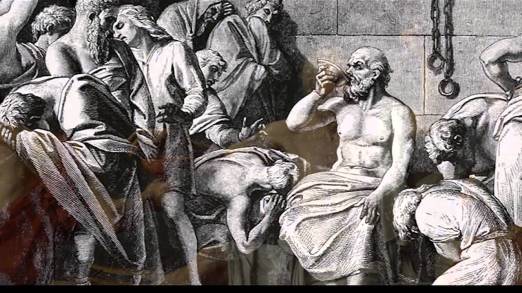
maxresdefault
Socrates calmly kills himself, showing an impressively (or chillingly?) measured attitude to his own demise. His friends are not so sanguine about it.

Disclaimer

This dialogue has been abridged and re-worded, with some silly bits added, to make the key arguments more accessible and engaging. It doesn’t represent a totally accurate re-telling of Plato’s original (which can be read here). However, it is designed to preserve the key basic thoughts and arguments, as well as giving a sense of some of the fascinating philosophical issues that Plato addresses in this dialogue.
Phaedo (2/3) – the ‘two worlds’ of existence, and reincarnation

Before you read this post, have you read Phaedo (part 1)?

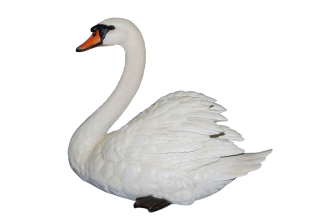
Swan
The Phaedo: is it Socrates’ swansong?

To recap on our previous post, Phaedo (one of Socrates’ friends) is re-telling the story of Socrates’ last few hours in prison before he meets his death. True to form as a determined and committed philosopher, Socrates has chosen to spend these hours discussing the nature of the soul and the afterlife, in a bid to comfort his friends that he is ultimately going to a better place after death. He’s already argued (based on the idea of ‘opposites’) that an immortal soul exists, and that it represents the pure and rational aspect of a human being, which is in constant conflict with bodily desires. Furthermore, Socrates has argued that the soul exists before death, and that all learning is remembering; and also, that the after death the soul will return to the perfect realm of the ‘forms’ from where it came. After being challenged by his friends, Simmias and Cebes, to provide a more convincing argument for the soul’s existing after death, Socrates responds…

Phaedo digested (part 2)

PhaedoI was discussing with my friend Echecrates the last hours of Socrates, and the discussion that was taking place between him and his friends Cebes and Simmias about death, the soul and the afterlife. Let’s get back the the flashback!

——————————————-

Cebes: We’ve heard your arguments so far, Socrates, which support the idea of an immortal soul that exists before we are born. But surely you’re aware that most people think that this ‘soul’ just… disappears when you die, or is scattered and doesn’t survive the death of the body? That’s what many say: that death is simply non-existence: and unlike Epicurus, I find this quite a terrifying thought! So perhaps you could say something against this view?

Socrates: You mean that the soul scatters after death? I’d imagine that it would scatter even more in windy weather! Ha ha: an ancient joke there.

Cebes: Don’t joke about it Socrates: this is serious stuff!

Socrates: I think your fears that the soul is scattered after death are childish: and I shall tell you why. You say the soul could be scattered: does that mean that it must be the kind of thing that can be split up into parts, and is changeable?

Cebes: That seems to follow: if the soul is scattered and dispersed after death, it must be the kind of thing that could be split up and be changed, rather than be stable and unchanging.

Socrates: I will now try to show that the soul cannot be split up in this way, and so isn’t scattered after death at all. Think back to the forms, the pure ideas, that we were talking about in the last post. What kind of existence to they have: do they change, and are made up of parts, or are they stable and unchanging?

Cebes: We’re talking about Goodness, Justice, Beauty, right? Well obviously, these things are objective and do not change or break down into parts.

Socrates: Right. And what about horses, cats, tables, chairs and clothes? What kind of things are these?

Cebes: A completely different kind! These things are changeable.

Socrates: So it seems as if we have ‘two worlds’ of existence: the invisible, unchanging world and the visible, changeable world. This idea is a favourite of mine! Now lets get back to the soul: which category does it fall into?

Cebes: Obviously, it seems to be the first category: the soul is invisible, unchanging, and can’t be split up into parts. The body, on the other hand, seems to be the opposite! It’s in the second category.

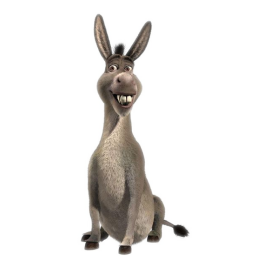
Donkey-3-icon
Greedy people, according to Socates, could get reincarnated as donkeys. How serious is he being?

Socrates: Well there’s a start. We’ve seen then, that the soul cannot scatter at death like the body, because it is in a different class of things: it belongs to the invisible, unchanging world, and this is how it has knowledge of these things before birth: remember? So you don’t need to fear that your soul will scatter at death: it’s clearly not the kind of thing (unlike the body) that could endure this fate! In fact, I’m thinking that when I die (which will be very soon, by the way), my soul will return to the world of the forms, having been purified during my life of practising virtue, philosophy, and the sacred art of questioning and annoying just about everybody in Athens! Remember what I said before about the  practice of philosophy being ‘training for death’: the pure soul goes to a good afterlife, whereas a soul that is dirty with ignorance and distracted by bodily pleasures during life goes to the bad place: or worse, is reborn as a beast! Think about it: if you’ve been greedy in life, and your soul is heavy with gluttony, you’ll be reincarnated as a donkey, obviously. Or if you’ve been unjust and tyrannical, you’ll be reborn as a wolf.  And perhaps those who have lived a decent life, but not trained in philosophy, will just get reborn as good people again. Not bad… but not as good as the world of the forms, where I’m going! Strange isn’t it, how similar this all sounds to Hindu reincarnation… funny, since I only got this idea from Pythagoras, who lived up the road. Seems to crop up everywhere.

Cebes: So what you’re saying is that in order for your immortal soul to get to a good afterlife (i.e. the form-world, though I can’t actually imagine what it is like), you need not just to be a good person, but to live a life away from bodily pleasures, and pursue philosophy wherever it leads? Sounds tough!

Socrates: Believe me, it has been! But I have cared for my soul, and this outweighs any trivial desires for my own bodily pleasure I might have had. Every pleasure and every pain provides another nail that pins the soul to the body! Philosophers avoid these nails, and instead calmly contemplate the Truth, wherever they find it, and also try to live as virtuous lives as possible. If they do this, there’s no danger that their souls will be scattered after death, or be reincarnated as donkeys, and so if you’ve lived such a life (as I hope I have), there’s no fear of death at all!

Socrates, after saying this, remains deep in thought. There is a long silence. Cebes and Simmias, moved but still not convinced, whisper to each other.

Socrates: What’s up, guys?

Simmias: Well to be honest, Socrates, we’ve still got some doubts. You’ve waxed lyrical about the forms, the immortal soul, and reincarnation. These all fit together well, but we’re still unconvinced about the whole picture. There’s so many questions to be answered! And you’re about to die… do you really want to spend your last few minutes persisting in defending your view?

Socrates: (laughing). Guys, guys. Here’s a fun (and oddly moving) animal fact for you: did you know that swans, when they’re about to die, sing louder and more beautifully than ever before in their lives? They do this because they know that in dying, they go to a better place. I feel just like a swan, except instead of singing, I philosophise. Never before in my life have I been more eager to pursue the truth. Fire away!

stevie-ray-vaughan-2
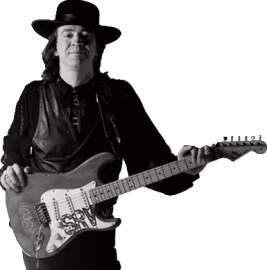
Is the soul more like the tone produced by the ‘body’ of a guitar than a separate, immortal substance?

Simmias: Well spoken! Well, both myself and Cebes here have objections to your view so far. Firstly, let’s imagine a guitar: maybe my nice new shiny fender strat. When I shred with the volume turned up to 11, the strings produce this kind of sweet tone that is invisible, clear, unchanging and without body. But the strings themselves, which produce the sound (with a bit of help from a distortion pedal or 5) are themselves physical, finite, and bodily: if I shredded TOO hard, they would break! Not ideal half way through a gig… Anyway, what I’m trying to say is that maybe the soul is more like this: a kind of harmony of the body. In this analogy, the soul is the pure tone of my strat, and its strings are the body. The pure tone of the guitar, or the harmony, is only present when the strings and the guitar are arranged in a certain way: if I was to smash the guitar on stage, or set fire to it Jimi-Hendrix style, the harmony would be destroyed. So just because the soul is invisible and not made up of parts (just like harmony or that sweet, sweet strat tone), doesn’t mean that it survives the death of the body! If we think of the soul like this, as a kind of mixture or arrangement of physical things, your argument doesn’t follow.

Socrates: That’s a nice point! Let’s hear what Cebes has to say before I tackle these issues.

Cebes: Well, I have a different possibility. Lets assume what you say is true: that the soul can survive death and be reincarnated in many different bodies, be they donkeys or men. Is it not possible that the soul, though it is strong and stable, could be worn out by each rebirth? It’s like a bit like a person buying, and wearing out, different coats. Each time he buys a new coat (just as a soul is reincarnated into a new body), he ages until eventually, after the last coat he wears, he dies. Why could it not be that the soul eventually dies, having been worn out by many bodies? That’s not a nice thought, and it doesn’t get rid of my fear of death, since even my soul could be destroyed eventually!

————————————————————–

PhaedoWell, I can tell you, after Simmias and Cebes made their objections, we were all feeling pretty low! Socrates had done his best to convince us that our fear of death was silly, but here he was, confronted with two new arguments, both of which showed the possibility that there really isn’t an afterlife!

EchecratesI know what you mean! Sometimes with philosophy, it’s hard to know WHAT to believe. You hear one argument and are convinced that it’s a good one, and then you hear the counterargument and are convinced by that one too! How did Socrates respond to his friends’ criticisms?

Phaedo: Well I was hanging out with Socrates as we took a break from the discussion. I asked him how he was going to respond to such objections: even Hercules couldn’t fight two people at once! But Socrates was calm, and told me that he relished the opportunity to respond. He said that ‘there is no greater evil one can suffer than to hate reasonable discourse’, and I agreed with him. It’s so important to calmly and rationally defend what one thinks is right in the face of criticism, for the sake of the Truth! This has never been more true than in the 21st Century, and in the current depressing political and social climate they find themselves in there! Socrates also said that instead of shying away from difficult discussion, we should confront it head on, and not give up our views so easily. I agreed with him. He was a competitive old bastard, and not one to give up on truth without a fight! Here’s how he responded:

————————————————————

Socrates: Simmias, and Cebes. You both laid out objections to my argument in an immortal soul. Simmias, you said that the soul could be a kind of harmony that whilst invisible, doesn’t survive death. Cebes, you said that the soul could get worn out by many reincarnations and eventually die. To both of you: think back to the theory of recollection that I spoke about earlier: that all learning is simply the soul recollecting past knowledge of the forms, from before birth? Would you stand by this?

Cebes/Simmias: Absolutely!

Socrates: Well, Simmias, you’d better abandon your view of the soul as harmony, then. You can’t hold that the soul exists before the body and that the soul is a harmony! How could the sweet harmony and tone of your guitar exist before the guitar itself was made? It doesn’t make sense. Harmonize THAT!

Simmias: Um….er….. I see that now. Well I’ll stand by the recollection idea, then. Maybe the soul can’t be a harmony after all!

Socrates: You’re right: it doesn’t make sense. Also, if the soul is a harmony, we would have to say that all souls are equally harmonious! And this clearly isn’t true: some people are just bad people, and have impure souls. And furthermore, isn’t the harmony and tone of your strat dependent on the build of your guitar itself? The strings control the sound, not the other way around. If your view was correct, the soul would be able to have no control of the body at all, but in reality, of course it does. The soul is able to control and resist all manner of bodily temptations and also guide a person into acting virtuously. Harmonies cannot have such control over their instruments. No: the soul is more divine than simple harmony.

Simmias: I consider myself refuted! The guitar tone analogy was rubbish!

a2c6db95bc03ab7eaff88c0ef50284cc
Does a person wear out coats like the soul wears out bodies, and eventually become worn out itself?

Socrates (turning to Cebes): now Cebes. You raised the idea of a soul wearing out many bodies but eventually being worn out itself, like a man wearing out many coats, but eventually dies. So the soul isn’t necessarily immortal, but instead could just be long-lasting (but eventually disintigrates). Sound about right?

Cebes: That was my argument, yes.

Socrates: Hmmmm (*thinks for a while*)…… that’s a tricky one. You know, it might be worth telling you a bit bit about my own intellectual development in order to respond to you there. I used to be a keen scientist, you know, and like all scientists I wanted to know exactly how the natural world works, and what kinds of things cause other things to happen, especially in human beings. I was desperate to know, for example, what kinds of things cause us to be alive, and how the human mind works on the basis of this. I realized that I was just confusing myself by asking these things, and couldn’t solve such challenging puzzles. Then I came across the philosopher Anaxagoras, who claimed that he could solve the problems with the idea that Mind is the basis of all reality. I was soon disappointed, however, when I realized that he didn’t really give a good solution to these issues at all, but blathered on about something called ‘ether’, which sounded to me like a load of nonsense. HE had no idea what he was talking about either! Turns out that some philosophers really talk a load of rubbish: who knew? Anyway, to cut a long story short, I didn’t get very far by finding out things from observation or by reading Anaxagoras, so I fell back on my own way of seeing the world and explaining things: and my way of seeing things involves the forms, which we’ve already mentioned. The things that cause things to be in the world are the forms: the form of the Beautiful, for example, makes beautiful things beautiful. And the form of Bigness makes big things big. And from the idea of these forms, Cebes, I will prove that the soul is immortal. You might well argue: why should we believe in forms at all? But I’m not going to argue for them here: they’re just part of the way I see the world. Are we all on board?

Cebes/Simmias: Sure thing, Socrates! Let’s agree for now that the forms exist, and explain why things are the way they are. What’s the link with the soul?

Socrates: Well, here we go: let’s take the example of the form of ‘tallness’. Things in the world that share in this form, all the tall things, cannot also share in the form of ‘shortness’. If a thing is tall, and then becomes short, then it must cease to become tall. This also goes for other qualities associated with that thing. Now, think about the body. What gives the body life?

Cebes: Well, the soul of course!

Socrates: We could then call the soul a ‘form of life’: it brings life to whatever body it inhabits. Now then: we were talking about forms and their opposites, and we saw that nothing can become its opposite whilst remaining itself. What would you say the opposite of life is?

Cebes: Well: death, obviously!

Socrates: Ok. And as we’ve seen, the soul is a bringer of life, and so death is something the soul could never be involved with! Something can’t share in its opposite, and this goes for the soul too. It follows from this that the soul is indestructible: it brings life, and cannot itself die. It is deathless, and therefore immortal! I have therefore proven what you asked of me, Cebes: the soul does not degrade after multiple reincarnations as you suggested, like a man wearing out many cloaks, but is immortal!

More ideas

The ‘affinity argument’ for the immortal soul

Anaxagoras_8
Anaxagoras was one of the greatest pre-Socratic philosophers, but didn’t impress Socrates.

Up to the ending of this part of the Phaedo, Socrates has given three separate arguments for the existence of the immortal soul. They are the argument based on things coming from their opposites, and the argument from recollection (in my previous post, Phaedo (part 1)). The third argument, given in this part of the Phaedo, is the ‘argument from affinity’, and it’s a tricky one. Perhaps the thing that might puzzle modern readers of this argument, apart from the fact that it’s obscure and difficult to fully grasp, is the extent to which it depends on Plato’s idea of ‘forms’. I discussed this concept in the previous post, but it is particularly striking in this part of the dialogue how Plato/Socrates uses the concept of form to do heavy lifting in the argument for the soul, given that there is no real argument given for the forms themselves in this dialogue. Socrates, when he gives his ‘intellecual history’ and discusses the philosopher Anaxagoras, seems to suggest that the forms are a kind of ‘best explanation’ of how things come to have the features they do in the world; however, so much is left unsaid, and the idea of forms themselves remain obscure. It could be said, then, that though Socrates’ affinity argument for the immortal soul is interesting in itself, it can only be accepted to the extent to which the doctrine of the forms is accepted. Socrates’ friends seem to all too readily accept the idea in the dialogue, and perhaps this is the sign that here we have Plato propounding his own ideas directly, rather than simply reporting on the thoughts of Socrates. It might be also noted that another thing assumed rather than argued for throughout the Phaedo is the existence of the soul itself. Though Cebes proposes a view of the soul as disintigrating after death, which might sound rather materialistic, even he doesn’t consider the possibility that the soul doesn’t exist in any sense, which is what a modern materialist might say.

Metahor and imagery

Plato is a great literary figure as well as a philosopher, and this section of the Phaedo shows his great ability to use interesting images and metaphors to support Socrates’ arguments. Simmias’ idea of the soul being like the harmony produced from the strings of a lyre (replaced by a fender strat in my verson) is a lovely image, as well as Cebes’ notion that the soul is like a weaver who wears out many cloaks over a lifetime. Cebes’ view borrows from the pre-Socratic philosopher Heraclitus, who argued that everything in the world, including souls, is subject to eventual change and decay. My favourite is when Socrates compares himself to a swan: swans, he suggests, are prophetic creatures that are devoted to the god Apollo, and sing the loudest and most joyfully when they are about to die, for they know that they will be reborn in a better place. Whether or not swans actually behave like this prior to death, this was a famous idea in ancient Greece, and it’s where the phrase ‘swansong’ comes from. Socrates, of course, is a swan in the sense that he is devoted to Apollo, and is convinced that after death, he will go to a good afterlife: his version of ‘singing’ is passionately and doggedly engaging in philosophical discussion until the very end.

What happens now?

The substantial argument of the Phaedo is now over: Socrates has outlined his (or more accurately, Plato’s) view of the body and the soul, the forms, and how these ideas relate. Join us in the next post, in which the Phaedo is concluded with one of the most poignant and memorable scenes in all of Plato, and indeed in all of philosophy: Socrates’ death.


Disclaimer

This dialogue has been abridged and re-worded, with some silly bits added, to make the key arguments more accessible and engaging. It doesn’t represent a totally accurate re-telling of Plato’s original (which can be read here). However, it is designed to preserve the key basic thoughts and arguments, as well as giving a sense of some of the fascinating philosophical issues that Plato addresses in this dialogue.
 

Phaedo (1/3) – on a life after death

1de5b457361337760b26d99b43c69336To recap on our previous dialogues, Socrates has been condemned to death for blasphemy and corrupting the youth; furthermore, he was unable to acquit himself in court, and he refused the opportunity to escape from prison. In this famous dialogue, the philosopher Phaedo is asked by his friends what happened to Socrates in the end. In a kind of ‘flashback’, Phaedo tells his friends the remarkable story, and reports not only on a series of interesting arguments about life after death, but also on the remarkable and poignant way in which Socrates met his fate at last.

Phaedo digested (part 1)

Echecrates: I heard you were there, Phaedo, when…

Phaedo: Yes, so I was. And I can tell you, the way Socrates faced his own mortality in that prison cell was… memorable. And inspiring.

Echecrates: Tell us, Phaedo!

Phaedo: It pains me to think about it. I’ve never experienced a more surreal or astonishing day. All his friends, including myself, were there. Some were laughing, others weeping. It was an emotional rollercoaster, I can tell you.

Echecrates: Tell us more!

Phaedo: Very well. I will begin at the beginning….

———————————-

In Socrates’ prison cell:

Phaedo: Socrates, what is this? We’re told that today is the day!

Xanthippe: (wailing): Nooooooooo!

Socrates: Please excuse my wife. Ýou know, I’ve been thinking. I sat up just now, after having been released from my chains, and noticed how pleasurable the feeling was. The relationship between pleasure and pain… it’s a funny one! They seem to always follow one another… like a creature with two heads.

Cebes: That sounds like something Aesop would say. Since when were you into poetry?

Socrates: I’ve been really getting into it recently. Helps pass the time in prison, you know. Anyway, it’s nearly time for me to die, so please wish well those who care about me, and tell them: those that are wise will follow me to the grave!

Simmias: What! What do you mean?! Are you advising that we should all commit suicide?

Socrates: All I’m saying is that sometimes, and for some people, it is better to die than to live.

Cebes: What a load of….

Socrates: Hear me out! You’d agree, right, that if the gods indicated to a person that they should kill themselves, then that would be a good reason to?

Cebes: Well I suppose; but you suggested that wise men (i.e. philosophers) should be willing and ready to die, and this seems strange. After all, we are the gods’ possessions; wouldn’t they want their finest possessions, the wise men, to live? And the philosophers, being wise, would surely want to remain in service to their masters. No; suicide is for the foolish!

Simmias: He has a point!

Socrates: Let me try to defend what I said: that philosophers should be willing to meet their deaths head on. By killing ourselves, we do not flee our masters, the gods: we join them! For I am convinced that there is a life after death.

Crito: You know, Socrates, it’s not a good idea to exert yourself in a long philosophical discussion right now… I’ve heard it makes the poison take longer to work!

Image result for plato pointing up png
Plato (whose views are spoken by Socrates in the Phaedo) points to the world beyond. His student, Aristotle, disagrees.

Socrates: Well, so be it! I’ve started so I’ll finish. The afterlife! It means we should be hopeful for death. As I’ve said before, the goal of the wise man is to practice the art of dying well. Why should we resent death when after death our soul goes to a better place? Let’s try and prove this. We can all agree that we will all die someday. What is death but the separation of the soul from the body? Only our souls go to heaven!!! Heh Heh: say that sentence out loud..

Simmias: Well that’s what they say.

Socrates: And we can all agree that philosophers are concerned with the state of their souls first and foremost, and not with other things like sex and eating and drinking: all the pleasurable stuff. The body is not knowledgeable like the soul: the eyes, ears, nose etc don’t tell us anything precise or accurate. However, the soul, or I could say the ‘mind’, can grasp the Truth, through logical reasoning! And it does this best when it isn’t distracted from the body. Nobody who is half way through a good old bit of hanky-panky can think straight, let alone philosophise!

Simmias: That is indeed so!

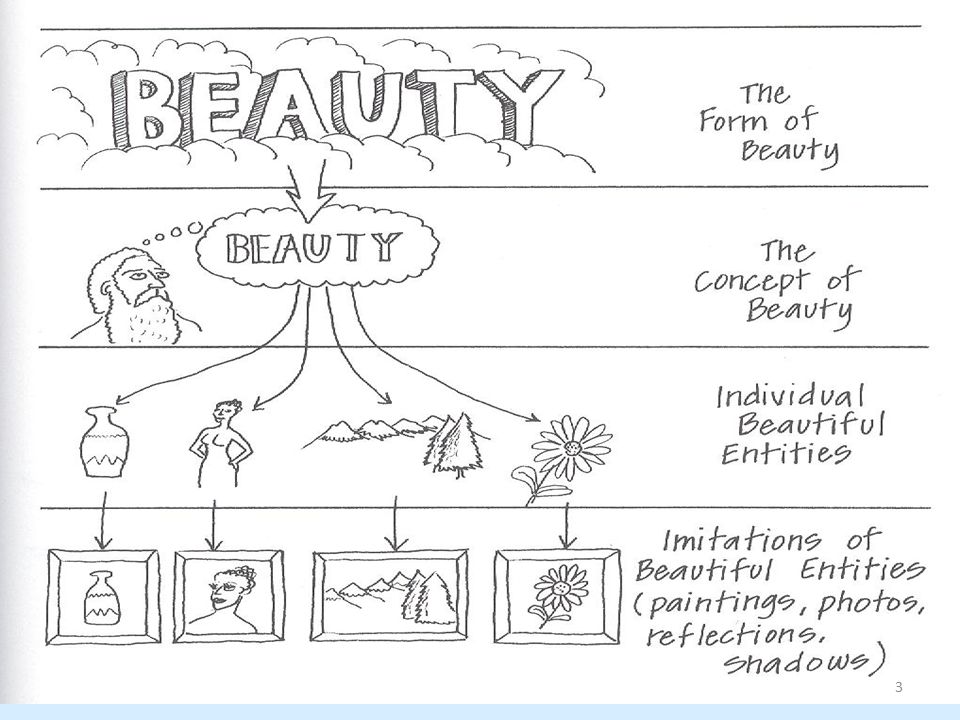
Socrates: Now lets think about the kind of truths that the soul has knowledge of. You’ve heard of the Just, the Good, the Beautiful: we know what these things are, but have we ever seen or heard them? We may have seen beautiful things in the world, for example, but we’ve never seen with our eyes the Beautiful itself, though we know about it. No: we grasp these truths though thought alone. Our minds are powerful: we can use them to track down reality itself, how things essentially are in themselves. The body and its senses just get in the way of this noble pursuit!

Simmias: This seems true. I do have the concept of the beautiful in my head, and it didn’t get there because I literally saw or heard it!

Socrates: Now then, given that the highest pursuit of the philosopher is to gain knowledge of these things (Goodness, Justice, Beauty etc), it follows that the body is a real pain in the arse in this regard. Bodily pleasures distract our minds from focussing on the Truth, and our desires, cravings and fears do the same. My friend Siddhartha over in India agreed, you know; and he seems a pretty knowledgeable guy. Pleasures and emotions, the stuff most people THINK is good, actually enslave us and prevent us from getting anywhere. It follows that we must escape the body if this true knowledge is to be found; which I think that it is. And of course, we can only do this after death (unless you believe what Pam Reynolds says…).

Simmias: This makes sense; anybody who loves learning must agree that true knowledge is possible, and that the body gets in the way of it.

Socrates: So I do feel that I can look forward to death: it will be a kind of purification. We’ve seen that this happens when the soul leaves the body, which kind of makes it dirty, and becomes clean. And this happens at death. Now then: how do I know my own soul is pure? Well, I’m a philosopher, and we clearly have the purest souls since we have spent our lives focussing on things like Beauty and Justice, rather than wasting our time having fun, like normal people! Well then, I believe I have proven my point: that philosophers should welcome their deaths.

Simmias: Well put that way, the idea of fearing or resenting one’s death seems downright foolish. Why would anybody fear going to a purer place?

Socrates: You’re right. And as I’ve said before: those who practice philosophy in the right way are in training for dying, and they fear death least of all men. A person who has lived a life of wisdom looks forward to the trip to Hades, because it is only there that true knowledge will be found. It goes to show that what I was saying in my “apology” in the court was right; it IS irrational to fear death, at least for philosophers like us. Courage, and living a moderate life, makes us brave, so that we can face death without fear. True virtue comes with courage, moderation, justice, and above all: wisdom. I have tried all my life to gain this: and therefore I look forward to death as a place where I will find good masters and good friends.

Related imageCebes: This sounds great Socrates, apart from one thing: I’m not convinced about all this talk of your ‘soul.’ Many people think that after death, it is destroyed, and no longer exists: I’d like to hear you prove the existence that the soul continues after death, as your whole view so far depends on this point! And I’m not convinced. And probably neither are the many readers in the 21st Century currently reading this blog!

Socrates: Fair enough Cebes: all this talk of a ‘soul’ seems a bit mysterious. Let’s try and prove its exists like I suggested earlier. Let’s think first about opposites: beautiful and ugly for example, or wise (like me) and stupid (like that Athenian jury that put me in this prison). It seems that each comes from the other: beauty only comes from ugliness, and wisdom only comes from ignorance, and vice versa. Agreed?

Cebes: So far, so good…

Socrates: Opposites, furthermore, seem to change into each other via a process. Waking up, for example, is the process of going from sleeping to its opposite, being awake. And falling asleep is going from being awake to being asleep. Now then: dying is going from being alive to being dead. What is the opposite process here?

Cebes: It appears that living must come from dying too, because we agreed that opposites generate each other.

Socrates: Well there we go then! The living come from the dead, and the dead come from the living. This can only work if the souls of the dead don’t pass away after bodily death: otherwise, the living wouldn’t be able to come from the dead. I’m thinking of souls passing from life to death, and then back again, proving that souls continue after death!

Cebes: A whole load of other things seem to follow from your view there. This idea that the soul is immortal is one, and another idea that all learning is remembering is another. What do you say about these ideas, Socrates? I’m not convinced yet…

Simmias: Wait… all learning is… remembering? That’s a weird one. Why would anybody think that?

Image result for remembering
For Plato, all learning is actually remembering

Cebes: Well I guess because there are cases where people give correct answers to certain questions, and couldn’t have got the knowledge any other way. Socrates, didn’t you witness this once, when you got Meno’s slave boy to do a load of maths? Can you give us some more examples that prove that learning is just the soul remembering stuff from a previous life?

Socrates: Sure thing. Let’s get clear on what remembering actually is. For example, when I see something that belongs to somebody, I think of that person. Like when I see your iPad, Cebes, I think of you: I remember you, as I associate you with the iPad. Nobody else I know owns one of these ridiculous contraptions. But there are many other kinds of examples that show that remembering comes from association like this.

Simmias/Cebes: Seems like common sense so far.

Socrates: Well then, let’s get abstract (like us philosophers love to do). What about those pure ideas, those objective concepts that seem to exist above all earthly things. Things like Beauty, Justice, Equalness etc. How do we get knowledge of these? It seems that we get knowledge of these entities from things around us that are like them. For exampel, my pet cats Purrthagoras and Leucippuss, are beautiful:  I see them, and the pure idea of beauty comes to mind.

Cebes: Fair enough. They’re very cute.

Image result for beautiful sunset brecon beacons png
Like Leucippuss, seeing a beautiful sunset also allows us to recall the Form of Beauty. (Photo: the Brecon Beacons, Wales, UK, by Black Mountain Photography)

Socrates: But surely we can also agree that, if seeing these beautiful creatures makes us think of the pure idea of Beauty, then this is a case of remembering; we showed this before, in the case of you and your iPad. I see your iPad and remember you, Cebes. I see Leucippuss and remember Beauty itself. Now then, Leucippuss is lovely, but he’s not as beautiful as the concept of Beauty itself…. but still, when I think of him, my mind is also drawn to the Beautiful. From all this follows that I must have known about the Beautiful before I set eyes on Leucippuss, because as I have shown, seeing and stroking Leucippuss allows me to remember the Beautiful.

Cebes: Seems so… but… wait!

Socrates: Yes! It follows that we must possess knowledge of the Beautiful from before we saw beautiful things, and so on for Goodness, EqualityJustice and these other ideas. Where does this knowledge come from? Well, not from the senses (the eyes and ears etc). Everything we get from looking and hearing etc is imperfect, and lacking when compared to the pure ideas themselves. So the knowledge of the pure ideas must come from before we had the senses: before we were born! Can you see how this links back in to the idea of the immortal soul yet, that we were discussing beforehand?

Cebes: Wait, hold on. Let’s get this straight. You first raised the idea that the soul is separate from the body, and carries on after death. Now you’ve argued that all learning is actually remembering things from before we were born. So the natural conclusion to draw is…

Socrates: Precisely, old chap! Our souls exist apart from the body before death, and gained the knowledge we ‘remember’ in life from there. And also that this process is tied up with the idea of these ‘forms’ or ‘pure ideas’ that I’ve been speaking about: Beauty, Holiness, Goodness, Justice, etc.

Simmias: Your arguments are interesting, Socrates, and now myself and Cebes are convinced that the soul existed before death, and that this idea depends on these things you call ‘Forms’: the pure, objective ideas that objects in the world (like your cats) resemble in terms of Beauty, etc. But what Cebes and I are still curious about something. You haven’t actually proven that the soul goes on existing after death, just that it exists before death. And you claimed earlier to be able to convince us of the afterlife, which requires the idea of the soul existing after death, not before it. It’s not called the beforelife, is it now? And I don’t see a reason to believe in the afterlife. Why could it not just be that the soul comes from somewhere before life, but then is destroyed at death, and doesn’t carry on?

Socrates: Well guys, I did kind of already prove this when I pointed out that everything comes from opposites, and therefore that life comes from death as well as death from life. But ok… I’ll try harder on this. My modern fans are sceptical of religious mumbo-jumbo and other unfashionable ideas like the afterlife, so more arguments are needed. Stay tuned!

More ideas

Why does Socrates try to prove the existence of the immortal soul and the afterlife? Why even think that there is a soul at all?

Related imageSocrates is about to die by drinking poison in front of all his friends: however, he seems remarkably upbeat. The Phaedo is all about why this is: Socrates seems to be convinced that his soul, which has been purified during his life, is going to be separated from his body when he drinks the poison, and he will therefore go to the Good Place. The whole dialogue is about Socrates proof of this happy idea: first he suggests the idea of a soul separate from the body (which his friends are all ok with in principle), and then he argues that this soul is immortal on the basis of these things called ‘Forms’ (or ‘pure ideas’ in my re-writing). These beliefs then get put together in the next part of the Phaedo to support Socrates’ claim that there is an afterlife.
To modern readers, these ideas can seem strange. Intellectual history has come a long way since Plato, and the idea of a ‘soul’ can sound like religious mumbo-jumbo to many people these days. Even the idea of a mind somehow ‘separate’ from the body can easily concern us: how is it still possible to believe in these ideas in the light of modern neuroscience and the suggested scientific perspective that the mind not separate from the body, but dependent on it, or even the same thing as it? This could lead us to dismiss Plato’s dialogue as a historical, unscientific relic; however, this is not the case. Dualism, the view that the mind is non-physical in some respect, still has its defenders today, if not in the full sense of an ‘immortal soul’, and besides, Plato raises a number of interesting arguments in the Phaedo that might make us reconsider this notion. The argument from remembering, for example, is a genuine attempt to explain where our knowledge of concepts such as Beauty and Justice come from: Plato suggests a soul that pre-exists our bodies as a possible explanation, arguing that we can’t gain true knowledge (of the ‘forms’) through the senses, because in order to recognise beauty in a thing, we need to have some pre-existing idea of it. This is another intriguing idea, separate from the question of the soul: are some ideas innate, or do we gain all ideas through experience? The philosophical struggles of the 16th and 17th Century between ‘rationalists’ such as Descartes and ’empiricists’ such as Hume are based on this thought. Plato is very much an early rationalist.

Fine, but why should we accept that the forms exist in the way Socrates/Plato claims?

Plato talks in this dialogue (via Socrates, of course) about the forms existing objectively,Image result for platonic forms in a separate reality. This is in fact his actual view: there is an immaterial, almost heavenly world out there which we refer to when we say that something is ‘beautiful’ etc. This is one of Plato’s most famous and also most controversial doctrines, and is simply assumed in the Phaedo, rather than formally argued for. In fact, Plato rarely presents any detailed arguments for the forms in all his work, and the doctrine substantially evolved over the course of his writings as well. In Phaedo, the idea of the forms plays a role in establishing the existence of the immortal soul, but in other dialogues, such as the Republic, the forms get focused on in their own right. If it seems like a crazy, unscientific and baffling idea that there could be an eternal, spiritual heaven of abstract objects, it’s worth knowing that Plato himself thought of the world of the forms as a ‘mathematical’ kind of place, rather than a ‘spiritual’ one. Furthermore, he didn’t believe in the Forms as a matter of religious faith (and we are not talking about ‘heaven’ here in a religious sense): he thought that the forms was an idea that could solve all sorts of other philosophical problems about thinking, and also how things in the world have their qualities. We will be discussing the forms much more over the course of this blog!

As Socrates said: stay tuned for Phaedo: part 2!


Disclaimer

This dialogue has been abridged and re-worded, with some silly bits added, to make the key arguments more accessible and engaging. It doesn’t represent a totally accurate re-telling of Plato’s original (which can be read here). However, it is designed to preserve the key basic thoughts and arguments, as well as giving a sense of some of the fascinating philosophical issues that Plato addresses in this dialogue.